Small Kitchen Organization and Storage Ideas: The Complete Guide
25 small kitchen organization and storage ideas that actually fit: counters, walls, cabinets, under the sink and no-pantry fixes, plus what to measure first.
PulseCrafted Kitchen is reader-supported: when you buy through links on this page, we may earn a commission at no cost to you. As an Amazon Associate I earn from qualifying purchases. How we make money
On this page
- Before you buy anything: a five-step plan
- Plan your kitchen in four zones
- Counters: keep them clear
- Walls and vertical space
- Inside your cabinets
- Under the sink
- Drawers
- Food storage when you have no pantry
- Fridge and appliances
- Budget and DIY small kitchen organization ideas
- What to look for in an organizer
- Our 6 picks for small kitchen organization
- Small kitchen organization mistakes that waste space
- Our guides in this category
- FAQ
A small kitchen rarely lacks space. It lacks planned space: the back of a cabinet you can’t reach, the wall above the counter you’ve never used, the gap beside the fridge collecting grocery bags. The small kitchen organization ideas below reclaim those spots without a renovation, and most of them work in a rental.
This guide is the hub for everything we write about kitchen storage. Start with the five-step plan, then jump to the area of your kitchen that frustrates you most. Every idea says what problem it solves and what to check before you buy, so you only spend money on things that fit. (Here’s how we choose what to recommend.) Short on time? Jump to our six organizer picks.
Before you buy anything: a five-step plan
Organizers can’t fix a kitchen that holds too much. These five steps take an afternoon and make every idea below work better.
- Empty one area at a time. Pick a single cabinet or drawer, take everything out, and wipe it down. Doing the whole kitchen at once is how organizing projects stall.
- Keep, relocate or let go. Keep what you used in the last few months. Move rarely used items (the turkey roaster, holiday platters) to a closet or high shelf. Donate duplicates: most people need one can opener and one set of measuring cups.
- Decide your zones. Group what’s left by where you use it first. More on this below.
- Measure the space. Width, depth and height of every shelf you plan to change, plus anything in the way: pipes, hinges, the garbage disposal, a shelf lip.
- Then buy containers and organizers, starting with the zone that bothers you most.
Plan your kitchen in four zones
Professional kitchens are arranged around tasks, and small home kitchens benefit even more, because every extra step happens in a cramped space. Divide yours into four zones and store each item where you reach for it first. Every other small kitchen organization idea in this guide builds on these zones.
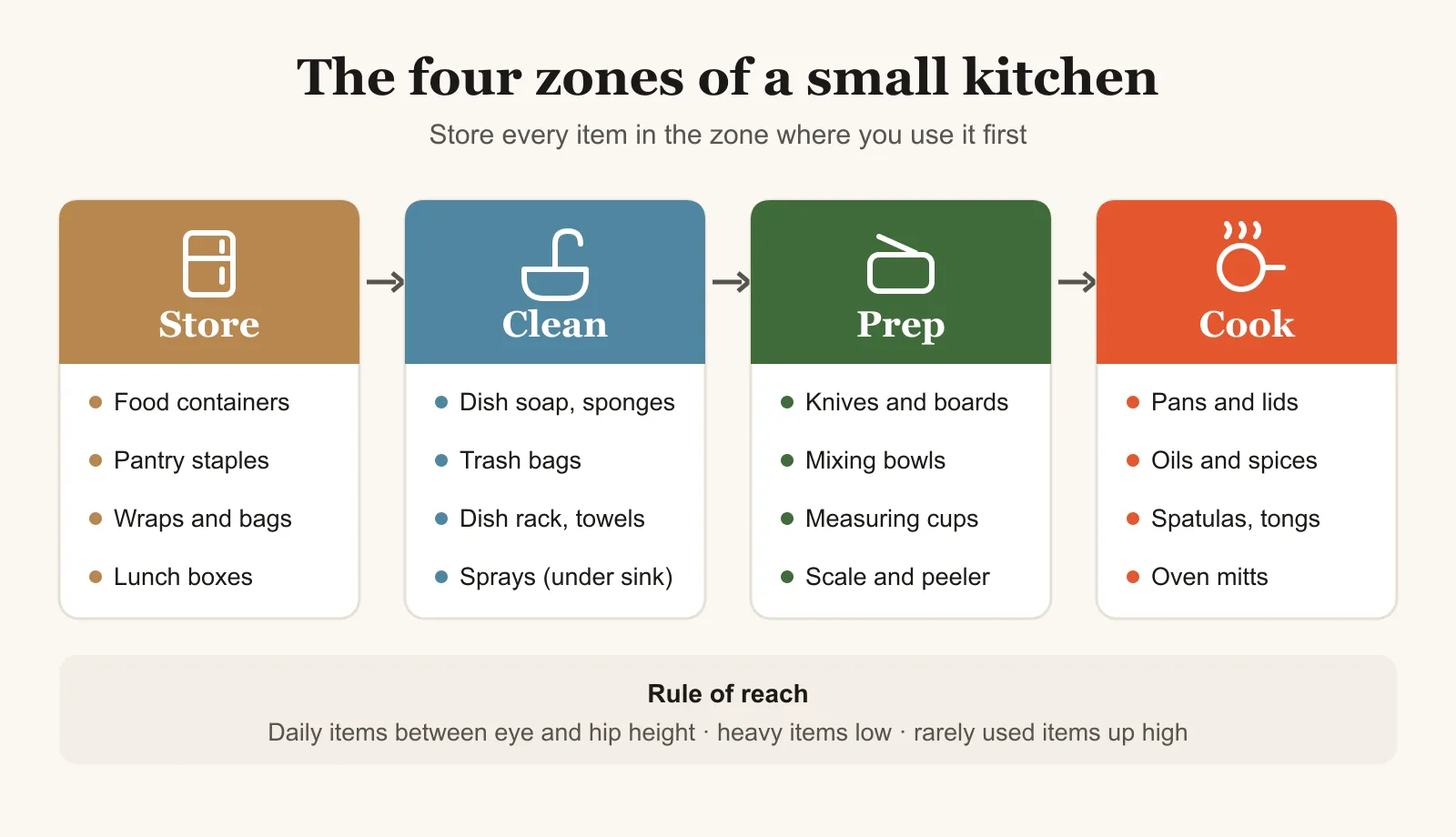
- Store: the fridge and your food cabinet or pantry. Food, containers, wraps, lunch boxes.
- Clean: the sink and dishwasher. Soap, sponges, towels, trash bags, cleaning sprays.
- Prep: your longest stretch of counter, ideally between the sink and the stove. Knives, cutting boards, bowls, measuring tools.
- Cook: the stove and oven. Pans, utensils, oils, everyday spices, oven mitts.
Then apply the rule of reach: things you use daily live between eye and hip height, heavy things go low, and things you use a few times a year go up high or out of the kitchen entirely.
Counters: keep them clear
Counter space is the most valuable real estate in a small kitchen, because it’s where you actually work.
1. Run the one-week test. For a week, put anything on the counter you didn’t touch that day into a box. At the end of the week, what’s still in the box gets a home in a cabinet. Most people end up keeping only the coffee maker, a knife block or strip, and a utensil crock out.
2. Corral what stays out. A tray or a small turntable turns five loose bottles into one object you can lift to wipe underneath. It also stops the slow spread of “just for now” items.
3. Move spices off the counter. Loose spice jars eat a surprising amount of counter. A tiered rack inside a cabinet, a slim rack on the inside of a door, or a wall-mounted rail near the stove keeps them visible without using workspace. If you cook with only a handful of spices, keep those near the stove and the rest in a drawer.
4. Create prep space on top of the sink. An over-the-sink cutting board or a roll-up drying rack turns the sink into extra counter when you need it and disappears when you don’t. Check the inner dimensions of your sink before you order one.
Walls and vertical space
The wall between your counter and upper cabinets is usually empty. Using it is the single biggest gain in most small kitchens.
5. Mount a magnetic knife strip. It frees a drawer or the counter space a knife block takes, and it’s kinder to blades than a crowded drawer. Mount it away from the stove and out of reach of small children. Our knives and prep guides cover which knives deserve the wall space.
6. Add a rail with S-hooks. A simple steel rail holds ladles, spatulas, whisks, mugs or a small basket for sponges. Look for rails that come with hooks so the spacing works.
7. Put everyday dishes on floating shelves. Two short shelves can hold the plates, bowls and glasses you use daily, which frees an entire upper cabinet for food or appliances. Keep open shelves for things you use constantly, so dust never settles.
8. Hang a pegboard. A pegboard on a free wall or the side of a cabinet can hold pans, lids and tools, and you can rearrange it as your needs change. Painted to match the wall, it looks deliberate rather than improvised.
9. Use the space above doors and windows. A single shelf above a doorway or window is perfect for things you need a few times a year: a big stockpot, cake stands, the backup paper towels.
10. Hang things under the upper cabinets. Mug hooks screwed into the cabinet bottom, or under-shelf wire baskets that slide onto an existing shelf, use the dead space between items.
Inside your cabinets
Most cabinets have one fixed shelf and a lot of air. These ideas fill the air.
11. Add shelf risers. A riser creates a second level inside a cabinet, so you can store small plates above large ones or cans above cans. This is the cheapest way to nearly double a shelf.
12. Store pans, lids and baking sheets vertically. A vertical file-style organizer lets you pull out one pan without lifting a stack. It works especially well for baking sheets, cutting boards and lids. If you’re replacing a mismatched set, our cookware guides favor pieces that nest or stack.
13. Make deep cabinets pull out. In deep base cabinets, things at the back are effectively lost. Sliding baskets or pull-out drawers bring the back to you. Measure the door opening, not just the cabinet interior, because hinges and face frames narrow it.
14. Use the back of cabinet doors. Slim racks on the inside of doors hold foil, wraps, pot lids, spices or cutting boards. Leave room for the shelf behind, or the door won’t close.
15. Put a turntable in corner cabinets. A large lazy Susan turns a blind corner into usable storage. Choose one with a raised edge so bottles don’t slide off when you spin it.
Under the sink
Under-sink cabinets are awkward because of pipes, and damp because of leaks. Plan for both.
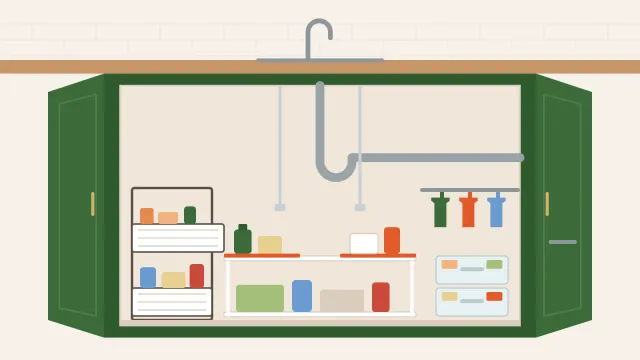
16. Choose an organizer shaped around the pipes. Two-tier sliding organizers in an L-shape, or ones with adjustable shelves, fit around the drain pipe and garbage disposal. Measure the height to the lowest pipe and the width on either side of it before you buy.
17. Hang spray bottles on a tension rod. A tension rod across the top of the cabinet holds spray bottles by their triggers and frees the floor below.
18. Contain and protect. A small bin for sponges and trash bags keeps the floor clear, and a waterproof mat or tray underneath protects the cabinet from slow leaks. It also makes leaks easier to spot.
Drawers
19. Give each drawer a single job and divide it. One drawer for cooking utensils near the stove, one for prep tools near the counter, one for wraps and bags near your food storage. Adjustable dividers stop things from migrating into a jumble.
20. Keep only the daily utensils in a crock. A crock by the stove should hold the five or six tools you use every day. Everything else goes in the drawer, which keeps the crock from tipping into a bouquet you have to dig through.
Food storage when you have no pantry
21. Decant staples into clear, square containers. Square or rectangular containers waste far less space than round ones, stack neatly, and show you when you’re running low. Label them, including the use-by date if you decant from packaging.
22. Fit a slim rolling cart into a gap. The narrow space between the fridge and the wall, or beside the stove, can hold a slim rolling cart for cans, oils and snacks. Measure the gap’s width and depth, and leave the clearance your fridge needs for ventilation.
23. Hang an over-the-door rack. A pantry, laundry or closet door near the kitchen can hold an over-the-door rack for spices, snacks and cans. Check that the door closes with the rack loaded, and that the hooks fit your door’s thickness.
Fridge and appliances
24. Group the fridge into bins. Clear bins for snacks, condiments and leftovers make the back of the fridge reachable. You pull out a bin rather than unloading a shelf, and you’re less likely to forget what’s at the back. For fridge temperatures and how long leftovers keep, see the FDA’s advice on storing food safely.
25. Be strict about appliances. Every countertop appliance should earn its spot. Favor multi-use machines, keep only the ones you use weekly on the counter, and store seasonal ones (the ice-cream maker, the slow cooker in summer) on a high shelf or outside the kitchen. Our small appliance guides compare the machines that earn their counter space.
Budget and DIY small kitchen organization ideas
Most of the ideas above cost little, and some cost nothing:
- Reuse jars. Clean glass jars from sauces and pickles make a matching set of pantry containers once the labels are off.
- Borrow office supplies. A sturdy magazine file or a simple wire file sorter holds pans, lids and baking sheets upright.
- Divide drawers with boxes. Shoeboxes and small cardboard boxes work as drawer dividers until you know which layout you actually need.
- Use tension rods. They’re inexpensive and hold spray bottles under the sink or split a cabinet into slots for trays and cutting boards.
- Add removable hooks. Adhesive hooks on the side of a cabinet hold measuring cups, oven mitts and towels without drilling.
- Spend last. Live with your new zones for a week, then buy organizers only for the spots that still annoy you.
What to look for in an organizer
Every small kitchen organization idea above depends on an organizer that actually fits. Before you add anything to your cart, check these six points. They are the difference between an organizer you love and one you return.
| What to check | Why it matters |
|---|---|
| Exact fit | Measure width, depth and height, including pipes, hinges and the door opening. Many returns come down to a few missing inches. |
| Material | Powder-coated steel handles weight and damp areas (under the sink). Plastic is light and easy to clean. Bamboo looks warm but dislikes standing water. |
| Weight capacity | Shelves for cans, cast iron or appliances need a stated load rating, not just good looks. |
| Renter-friendly mounting | Tension rods, freestanding units, over-the-door racks and removable adhesive hooks avoid drilling. Check that adhesives suit your surface. |
| Clear or solid | Clear containers show what you have; solid ones hide visual clutter on open shelves. Use clear inside cabinets and the fridge. |
| Easy to clean | Kitchen grease gets everywhere. Wipe-clean or dishwasher-safe pieces stay nice for longer. |
Our 6 picks for small kitchen organization
We haven’t tested these organizers in our own kitchen. We chose them by comparing their sizes, materials and weight ratings against typical small kitchen sinks, cabinets and drawers, and by reading owner feedback for common problems. Each one does the job of one idea above, so start with the spot that annoys you most. Shopping for someone else? Our guide to gifts for small kitchens has ideas that actually fit.
- Best for prep spaceSurpahs Roll-Up Dish Drying Rack, 20.5 x 13.1 InchesCheck price
- Best for knivesHOSHANHO Acacia Wood Magnetic Knife Strip, 16-InchCheck price
- Best for shelf spaceSimple Houseware Under Shelf Wire Basket, 2-PackCheck price
- Best for pans and sheetsYouCopia StoreMore Bakeware RackCheck price
- Best for deep cabinetsSimple Houseware Pull-Out Cabinet Sliding BasketCheck price
- Best for drawersPipishell Expandable Bamboo Drawer OrganizerCheck price
| Start here | Walls | Shelves | Pans | Deep cabinets | Drawers | |
| Product | Surpahs Roll-Up Rack | HOSHANHO Knife Strip | Simple Houseware Under-Shelf | YouCopia StoreMore | Simple Houseware Pull-Out | Pipishell Organizer |
| Best for | Prep and drying space over the sink | Knives off the counter | Wraps, towels and snacks | Baking sheets, boards and lids | The back of deep base cabinets | Utensil and cutlery drawers |
| Size | 20.5 x 13.1 in | 16 x 2.5 x 0.7 in | 13.5 x 9.75 x 5.5 in, each | 11.5 x 7.3 x 6.3 in | 17.2 x 9.7 x 5 in | 13 to 19.6 in wide, 16.9 in deep |
| Material | Silicone over stainless steel | Acacia wood with magnets | Steel wire | Coated steel and plastic | Metal wire with a plastic liner | Bamboo |
| Setup | Rests across the sink | Screws or adhesive tape | Slides onto a shelf | Sits on the shelf | Sits on the cabinet floor | Sits in the drawer |
| Measure first | Sink opening, up to 19.5 in | Wall space away from the stove | Room under the shelf | Cabinet height | Door opening and depth | Drawer width and depth |
| Buy | Check price on Amazon | Check price on Amazon | Check price on Amazon | Check price on Amazon | Check price on Amazon | Check price on Amazon |
Surpahs Roll-Up Dish Drying Rack, 20.5 x 13.1 Inches
Best for: Small kitchens where the sink is the only spare surface
This rack turns the sink into extra counter. Dry dishes over it, rinse produce on it, or rest a hot pan or a cutting board on top while you cook. When you’re done, it rolls up and fits in a drawer. Measure the inside width of your sink first, because the rack has to reach both edges.
What we like
- Fits across sink openings up to 19.5 inches
- Stainless steel rods covered in non-slip silicone
- Heat resistant to 400°F, so hot pans can rest on it
- Rolls up small when you need the sink back
Watch out for
- Check your sink: it needs a ledge on both sides
- Covers part of the sink while it is out
- Too long for most small bar sinks
- Size
- 20.5 x 13.1 in
- Fits
- Sink openings up to 19.5 in
- Material
- Silicone-covered stainless steel
HOSHANHO Acacia Wood Magnetic Knife Strip, 16-Inch
Best for: Freeing the counter space a knife block takes
A magnetic strip frees a drawer or the counter corner a knife block takes, and every blade stays in view. Mount it on the wall above your prep area, away from the stove and out of reach of small children. Put knives on spine first and lift them off the same way. The same strip holds steel tools like peelers and kitchen shears.
What we like
- Two rows of magnets under an acacia wood face
- Wood is gentler on blade edges than bare metal
- 16 inches long, room for a full set
- Mounts with screws, or with tape on smooth walls
Watch out for
- Only holds steel, not ceramic knives
- Tape suits smooth surfaces only
- Wipe it clean; wood should not be soaked
- Size
- 16 x 2.5 x 0.7 in
- Mounting
- Screws or double-sided tape
- Material
- Acacia wood
Simple Houseware Under Shelf Wire Basket, 2-Pack
Best for: Cabinets and pantry shelves with a gap above short items
Most cabinet shelves have a band of empty air between the shelf and the short items below. An under-shelf basket turns that band into a drawer for foil, plastic wrap, tea towels or snack bags. It is the renter-friendly version of idea 10, because nothing gets screwed in. Leave a little room so the basket slides out without hitting what’s underneath.
What we like
- Slides onto an existing shelf, with no tools or drilling
- Two baskets, each 13.5 inches wide
- Holds wraps, napkins, snacks or towels
- Works in cabinets, pantries and on open shelves
Watch out for
- Best for light things, since it hangs from the shelf
- Needs about 5.5 inches of free space under the shelf
- Check that the arms suit your shelf thickness
- Size
- 13.5 x 9.75 x 5.5 in, each
- Contents
- 2 baskets
- Material
- Steel wire
YouCopia StoreMore Bakeware Rack
Best for: Baking sheets, cutting boards, trays and lids stored on end
Stacked baking sheets and boards mean lifting the whole pile to reach the one at the bottom. Standing them on end, like files, lets you pull out one without moving the rest, which is idea 12 in practice. Put this rack in the cabinet nearest the oven. If you also need room for heavy pans, pair it with an expandable pan rack.
What we like
- Seven adjustable dividers, so you set the slot widths
- Coated steel dividers protect pans from scratches
- Non-slip feet keep it in place as you pull items out
- Sets up in minutes, with no tools
Watch out for
- 11.5 inches wide, so it holds a handful of items
- Made for flat items, not bulky pots
- Very large sheet pans may stick out of the front
- Size
- 11.5 x 7.3 x 6.3 in
- Dividers
- 7, adjustable
- Material
- Coated steel and plastic
Simple Houseware Pull-Out Cabinet Sliding Basket
Best for: Deep base cabinets where things get lost at the back
In a deep base cabinet, the back half is effectively lost. This basket brings it to you: slide it out, grab what you need, and push it back. Use one for oils and sauces near the stove, or two side by side under the sink for cleaning supplies. Measure the door opening, not only the inside of the cabinet, because hinges and face frames make it narrower.
What we like
- Pulls out on a wheel-guided rail, like a drawer
- Sits on the cabinet floor, with no screws
- Removable divider to split the basket
- Plastic liner stops small items falling through the wire
Watch out for
- 9.7 inches wide, so it fills only part of a wide cabinet
- Just 5 inches tall, best for bottles and short items
- Some assembly needed
- Size
- 17.2 x 9.7 x 5 in
- Divider
- Removable
- Material
- Metal wire frame with a plastic liner
Pipishell Expandable Bamboo Drawer Organizer
Best for: Cutlery and utensil drawers that turn into a jumble
Idea 19 says to give each drawer one job and divide it. This organizer does that in one piece: it slides out to the width of your drawer, so there’s no gap for things to fall into. Use it for cutlery in the drawer by the dishwasher, or for prep tools near the counter. Measure the drawer’s inside depth before you order.
What we like
- Expands from 13 to 19.6 inches wide to fill the drawer
- 6 to 8 compartments for cutlery and tools
- Bamboo looks warm and wipes clean
- Keeps things from sliding when the drawer opens
Watch out for
- Needs a drawer about 17 inches deep
- Wipe clean only; bamboo dislikes standing water
- Too big for very small drawers
- Size
- 13 to 19.6 in wide, 16.9 in deep, 1.9 in tall
- Compartments
- 6 to 8
- Material
- Bamboo
Small kitchen organization mistakes that waste space
- Buying organizers first. Declutter and measure, then buy. Otherwise you organize things you don’t need.
- Mixing container shapes. Round, odd-sized containers leave gaps. Pick one square system and stick with it.
- Overloading open shelves. Open shelves look calm with a few items in each row and chaotic when packed. Keep them for everyday dishes.
- Storing heat-sensitive things above the stove. Heat and steam shorten the life of spices and oils. Keep them nearby, not directly above.
- Blocking doors and drawers. An organizer that stops a door from closing or a drawer from opening creates a new problem. Check clearance with the organizer loaded.
Our guides in this category
Every detailed storage guide we publish appears here automatically, from glass containers to under-sink organizers. Browse the full Storage & Organization category as well.
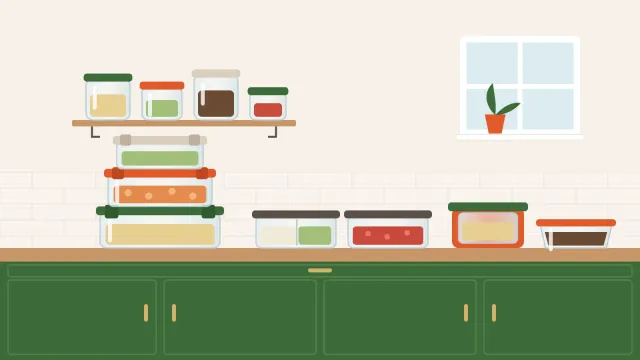
- The Best Glass Food Storage Containers for Leftovers, Meal Prep and LunchesBest picks
The best glass food storage containers for leftovers, meal prep and lunches: 5 sets compared on leaks, oven safety, lids and stacking, plus how to choose.
- The Best Under-Kitchen-Sink Organizers (That Fit Around Pipes)Best picks
The best under kitchen sink organizer for your cabinet: 5 picks that fit around pipes, from expandable shelves to pull-out baskets, plus how to measure first.
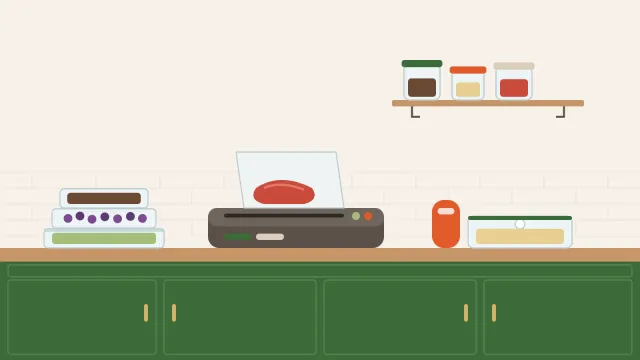
- The Best Vacuum Sealers for Home Use (Countertop, Handheld and Chamber)Best picks
The best vacuum sealer for home use: 5 picks compared, from a countertop all-rounder to a compact handheld and a chamber sealer for soups, plus how to choose.
- Glass vs Plastic Food Storage Containers: Which Is Better?Comparison
Glass vs plastic food storage containers compared on safety, weight, stains, price and lifespan, plus which to use for reheating, lunches and the freezer.
- How to Organize a Small Kitchen Without a PantryHow-to
How to organize a small kitchen without a pantry in 9 steps: pick the right cabinet, decant staples, use doors and gaps, and keep food cool, dry and safe.
- Small Pantry Organization: Ideas and Organizers That FitHow-to
Small pantry organization in 10 steps: measure first, zone the shelves, add risers, turntables and labeled bins, use the door, and keep it tidy all year.
- Gifts for Small Kitchens: 8 Useful Ideas That Actually FitBest picks
The best gifts for small kitchens save space or replace something bulky. Here are 8 useful picks, from a slim zester to a compact cooker, and what to skip.
- Kitchen Stocking Stuffers: 10 Small Gifts Cooks Actually UseBest picks
The best kitchen stocking stuffers fit in a drawer and get used every week. Here are 10 small, useful picks, from sharp shears to a clip-on strainer.
FAQ
How do I organize a small kitchen with very few cabinets?
Go vertical first: a magnetic knife strip, a rail with hooks and two floating shelves move a surprising amount out of cabinets. Then add a slim rolling cart for food, and keep only daily items on the counter. Use any cabinets you do have for heavy and bulky things.
Where should spices go in a small kitchen?
Near the stove, but not directly above it, because heat and steam shorten their shelf life. A tiered rack in a nearby cabinet, a door-mounted rack or a drawer insert all work. Keep your five or six most-used spices within reach and the rest a step away.
Is open shelving a good idea in a small kitchen?
Yes, for things you use every day, like plates, bowls and glasses. They come off the shelf often enough that dust doesn’t build up, and moving them out of a cabinet frees closed storage for food or appliances. Avoid filling open shelves with rarely used items.
How can I organize a rental kitchen without drilling?
Use freestanding and tension-based pieces: shelf risers, turntables, tension rods, over-the-door racks, freestanding under-sink organizers and rolling carts. Removable adhesive hooks work for light items. Check your lease and test any adhesive on a hidden spot first.
What are the best organizers for a small kitchen?
Start with the ones that use space you’re wasting: a roll-up rack over the sink, a magnetic knife strip on the wall, under-shelf and pull-out baskets in the cabinets, a rack for baking sheets, and dividers in the drawers. Our six picks cover each one. Measure before you buy, because fit matters more than the brand.
What should I organize first?
The zone that frustrates you most, usually the counter or the cabinet under the sink. A quick, visible win makes it much easier to keep going with the rest of the kitchen. Then work through the other small kitchen organization ideas one zone at a time.