Glass vs Plastic Food Storage Containers: Which Is Better?
Glass vs plastic food storage containers compared on safety, weight, stains, price and lifespan, plus which to use for reheating, lunches and the freezer.
PulseCrafted Kitchen is reader-supported: when you buy through links on this page, we may earn a commission at no cost to you. As an Amazon Associate I earn from qualifying purchases. How we make money
On this page
- Glass vs plastic at a glance
- Glass food storage containers: pros and cons
- Plastic food storage containers: pros and cons
- Is plastic safe for food storage?
- When to choose glass food storage containers
- When to choose plastic food storage containers
- Our picks: the best glass and plastic containers
- How to choose between glass and plastic
- A mixed kit for a small kitchen
- How to make glass and plastic containers last
- FAQ
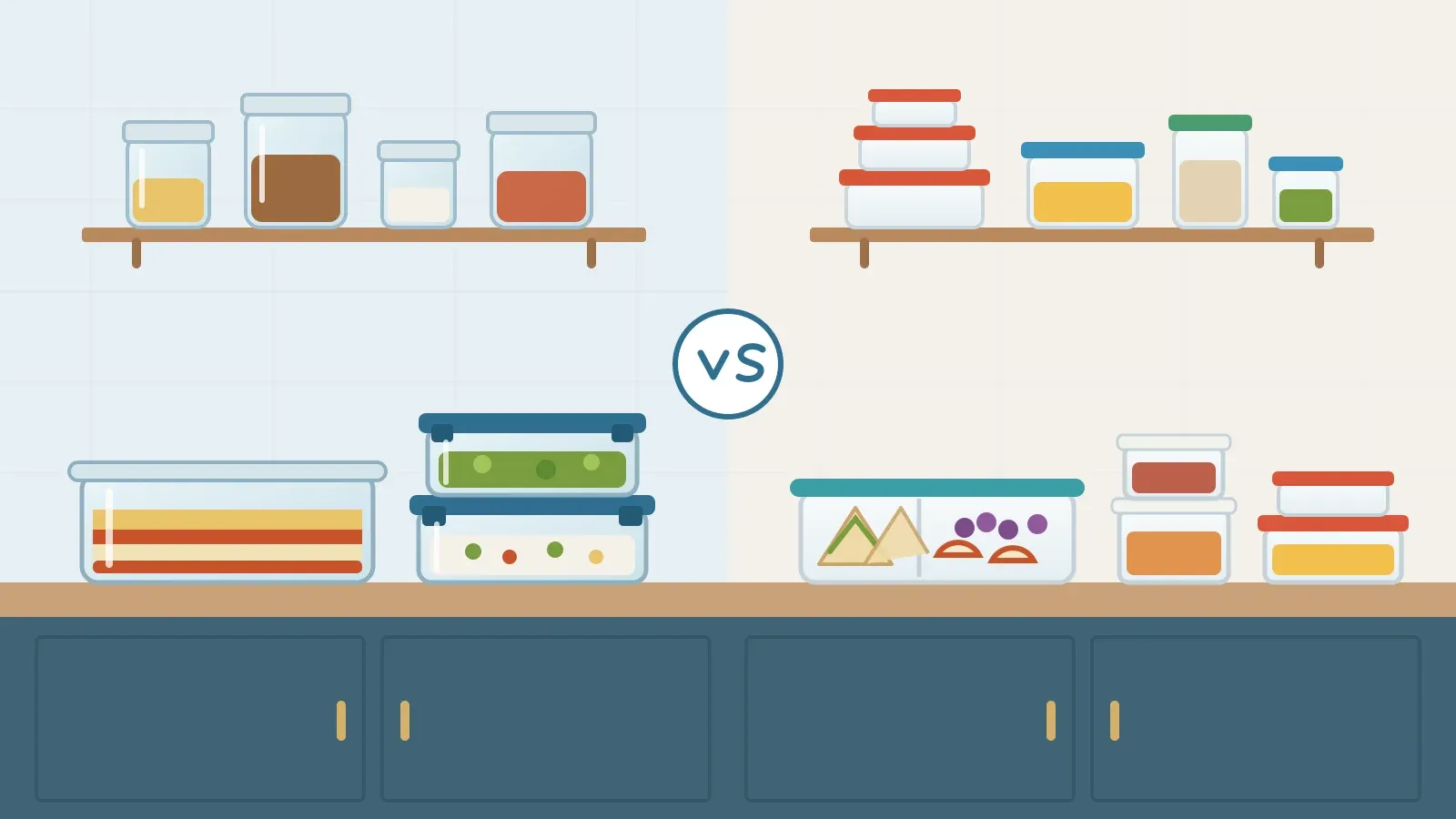
In the glass vs plastic food storage containers debate, glass is the better everyday choice for most kitchens. It doesn’t stain or hold smells, it lasts for years, and you can reheat food in it without worrying about what the heat does to the container. Plastic still wins in a few places: packed lunches, kids’ snacks, the freezer and anywhere a dropped container would shatter.
So the honest answer for most homes is both. Use glass for leftovers you’ll reheat, and keep a smaller set of good plastic for food that travels.
How we chose: we haven’t lab-tested these containers ourselves. We compared materials, manufacturer care rules and published research on heating plastic, then picked sets that do each job well. (More on how we choose what to recommend.)
Glass vs plastic at a glance
Here is how glass and plastic food storage containers compare on the things that matter day to day.
| Glass | Plastic | |
|---|---|---|
| Best for | Reheating, leftovers, oven-to-table, acidic or oily food | Lunches, kids, freezer portions, pantry and travel |
| Weight | Heavy | Light |
| Breaks? | Can chip or shatter if dropped or shocked by heat | Shatter-resistant, but scratches and warps |
| Stains and smells | Resists both | Tomato sauce and curry can stain; smells can linger |
| Microwave | Yes (lid off or vented) | Only if labeled microwave safe; glass is the safer choice for reheating |
| Oven | Most glass bases are oven safe; lids are not | No |
| Price | Higher up front | Lower up front |
| Lifespan | Many years if it doesn’t break | Replace when scratched, cloudy or warped |
Glass food storage containers: pros and cons
Glass is non-porous, so food doesn’t soak into it. A container that held chili on Monday can hold fruit on Tuesday without an orange tint or a garlic smell. Most glass bases also go in the oven, so you can bake, store and reheat in one dish, and glass doesn’t scratch the way plastic does, so it still looks clean after years in the dishwasher.
The downsides are weight and breakage. A full set of glass is heavy to carry in a lunch bag and can break if you drop it. Glass also dislikes sudden temperature changes: taking a dish straight from the freezer into a hot oven can crack it. Read the care rules for your set, because tempered and borosilicate glass have different limits.
Glass containers almost always come with plastic lids, so a “glass” set isn’t completely plastic-free. The good news is that the lid rarely touches hot food if you take it off or vent it before reheating.
Plastic food storage containers: pros and cons
Plastic is light, cheap and hard to break, which is exactly what you want in a school bag or a crowded freezer. Good plastic sets nest inside each other, so they take up little cabinet space, and their lids snap on tightly enough to carry soup or salad dressing without leaks.
The trade-offs show up over time. Plastic scratches, and the scratches hold stains and smells. Tomato sauce, curry and turmeric often leave a permanent tint. High heat in the microwave or on the bottom rack of a dishwasher can warp thin plastic so lids stop sealing. Most plastic containers simply wear out faster than glass and need replacing.
Not all plastic is the same. Cheap takeout-style tubs are thin and meant for short-term use. Sturdier sets, such as Tritan plastic, are thicker, clearer and much more stain resistant.
Is plastic safe for food storage?
Plastic containers sold for food in the US are made from materials the FDA allows for food contact, and many are labeled BPA-free. For cold storage, plastic is a practical choice.
Heat is where the questions start. A 2023 study from the University of Nebraska–Lincoln found that microwaving plastic food containers released far more microplastic and nanoplastic particles than storing food in them at fridge or room temperature (coverage of the study). The FDA’s current position is that the evidence does not show that the levels found in food pose a health risk, and that more research is needed.
You don’t need to throw out your plastic. A few simple habits cover most of the concern:
- Reheat in glass or ceramic. Move food out of plastic before microwaving it, or store it in glass to begin with.
- Let hot food cool before it goes into plastic. Then refrigerate it within two hours.
- Replace worn plastic. Containers that are scratched, cloudy, cracked or warped are due for retirement.
- Wash plastic on the top rack. The bottom rack of a dishwasher runs hotter.
When to choose glass food storage containers
- You reheat leftovers at home. Glass goes from fridge to microwave, and most bases go in the oven too.
- You store acidic, oily or strongly colored food. Tomato sauce, curry and chili won’t stain glass.
- You want containers that last. A good glass set can serve you for a decade.
- You meal prep for the week. Glass keeps food looking fresh and doubles as a serving dish.
- You want less plastic in contact with food. Only the lid is plastic, and it can come off before heating.
When to choose plastic food storage containers
- Food travels. Lunches, picnics and road trips are lighter and safer with plastic.
- Kids handle the containers. A dropped plastic box survives; a dropped glass one may not.
- You freeze in bulk. Light, stackable plastic is easy to fill flat and stack in a small freezer.
- You’re organizing a pantry. Clear plastic canisters for flour, rice and snacks are lighter and cheaper than glass.
- You need lots of containers on a budget. A big plastic set costs less than a few pieces of glass.
Our picks: the best glass and plastic containers
- Best glass overallRubbermaid Brilliance Glass, Set of 9Check price
- Best budget glassPyrex Simply Store 18-Piece SetCheck price
- Best plastic overallRubbermaid Brilliance Plastic, Set of 5Check price
- Best budget plasticRubbermaid EasyFindLids 42-Piece SetCheck price
- Best of bothOXO Good Grips 30-Piece Glass and Plastic SetCheck price
| Best glass | Budget glass | Best plastic | Budget plastic | Both | |
| Product | Rubbermaid Brilliance Glass | Pyrex Simply Store | Rubbermaid Brilliance Plastic | Rubbermaid EasyFindLids | OXO Smart Seal 30-Piece |
| Material | Tempered glass, plastic lids | Tempered glass, plastic lids | Tritan plastic | Plastic | Glass and plastic, plastic lids |
| Lids | Latching, leakproof | Press-on, not leakproof | Latching, leakproof, vented | Snap-on, vented | Four locking tabs, silicone seal |
| Pieces | 9 containers + lids | 9 containers + lids | 5 containers + lids | 21 containers + lids | 15 containers + lids |
| Oven-safe bases | Yes | Yes | No | No | Glass bases only |
| Best for | Leftovers and reheating | Fridge storage on a budget | Lunches and the fridge | Big families, freezer, giveaways | One set for home and on the go |
| Buy | Check price on Amazon | Check price on Amazon | Check price on Amazon | Check price on Amazon | Check price on Amazon |
Rubbermaid Brilliance Glass, Set of 9
Best for: Leftovers you reheat at home, from single portions to casseroles
This is the glass set we’d buy first, and it’s also our top pick in our guide to the best glass food storage containers. The latching lids don’t leak, the wide rims are easy to hold when the glass is hot, and nine sizes cover everything from a portion of rice to a family-size bake. The lids are interchangeable with the Brilliance plastic containers below, which makes a mixed kitchen simple.
What we like
- Latching lids that stay leakproof
- Flat lids stack securely in the fridge
- Glass bases are oven-safe to 450°F
- Lids also fit Rubbermaid Brilliance plastic containers
Watch out for
- Lids are plastic, so the set is not plastic-free
- Seals are built in and can’t be removed for cleaning
- Heavier than plastic in a lunch bag
- Containers
- Three 1.3-cup, two 2-cup, two 3.2-cup, one 4.7-cup, one 8-cup
- Glass
- Tempered
- Care
- Dishwasher safe (lids top rack), freezer safe
Pyrex Simply Store 18-Piece Set
Best for: Fridge leftovers and baking when you want glass without the high price
If you want to switch your fridge leftovers from plastic to glass without spending much, this is the easy way in. The glass is thick and simple to clean, and the bowls go straight from the fridge to the table. Just keep it at home: the press-on lids are fine on a fridge shelf but not in a bag.
What we like
- Nine glass containers for the price of a few latching ones
- Glass resists stains and smells
- Glass goes in a preheated oven with the lid off
- 2-year limited warranty on glass and lids
Watch out for
- Press-on lids have no gasket, so they are not leakproof
- Mostly round shapes waste fridge space
- Avoid sudden temperature changes (no freezer straight to oven)
- Containers
- One 7-cup round, one 6-cup rectangle, two 4-cup round, two 3-cup rectangle, two 2-cup round, one 1-cup round
- Glass
- Tempered
- Care
- Lids are freezer, microwave and top-rack dishwasher safe
Rubbermaid Brilliance Plastic, Set of 5
Best for: Packed lunches, salads and fridge storage where weight matters
This is plastic done well. Tritan is thicker and clearer than the usual tub plastic, and Rubbermaid says it resists stains and smells, the two biggest complaints about plastic containers. The latching lids are the same design as the glass set above, so the containers travel without leaking. Use the small sizes for lunches and snacks, and the big one for salad greens in the fridge.
What we like
- Crystal-clear, BPA-free Tritan plastic that resists stains and odors
- Latching lids are leakproof
- Built-in vents under the latches for microwaving
- Safe for the dishwasher, microwave and freezer, with a lifetime warranty
Watch out for
- Only five containers in the set
- Still plastic: we would reheat in glass when you can
- Not oven safe
- Containers
- Two 1.3-cup, two 3.2-cup, one 9.6-cup
- Material
- BPA-free Tritan plastic
- Care
- Dishwasher, microwave and freezer safe
Rubbermaid EasyFindLids 42-Piece Set
Best for: Big families, freezer portions and sending leftovers home with guests
Sometimes you just need a lot of containers: for a freezer full of soup portions, for kids’ snacks, or for leftovers you won’t get back after a family dinner. This big set costs about the same as a few glass pieces, and the lids clip onto each other so the cabinet stays tidy. Treat it as the everyday workhorse and keep the sauces in glass.
What we like
- 21 containers and 21 lids in assorted sizes
- Lids snap together and onto the bases, so they don’t get lost
- Vented lids for splatter-resistant microwaving
- BPA free, microwave safe and dishwasher safe
Watch out for
- Thinner plastic that can stain with tomato sauce
- Snap-on lids are not as leakproof as latching lids
- Lots of sizes means some you won’t use
- Containers
- 21 assorted sizes
- Lids
- Red, vented, snap together
- Care
- Microwave and dishwasher safe
OXO Good Grips 30-Piece Glass and Plastic Set
Best for: One set that covers reheating at home and lunches on the go
If the answer to glass vs plastic is “both”, this set is the shortcut. You get glass for the food you reheat and plastic for the food that travels, and one set of lids fits both, so you’re never hunting for the right one. The removable seal is a nice touch: it pops out so you can wash underneath it, which stops old smells from building up.
What we like
- Eight glass containers and seven plastic containers in one set
- Lids are interchangeable between same-size glass and plastic containers
- Four locking tabs and a removable silicone seal that is easy to clean
- Plastic containers nest and stack, and are microwave, freezer and dishwasher safe
Watch out for
- A bigger investment than a single-material set
- Plastic lids on the glass containers too
- Takes more cabinet space than a plastic-only set
- Containers
- 4 round glass, 4 rectangular glass, 7 plastic
- Lids
- Locking, removable silicone seal
- Care
- Plastic containers are microwave, freezer and dishwasher safe
How to choose between glass and plastic
Five questions settle it. Choosing between glass and plastic food storage containers comes down to how you use them in a normal week, not to the containers themselves.
Will you reheat food in it?
If yes, choose glass. Glass handles the microwave and, for most bases, the oven, and heat doesn’t wear it down the way it wears down plastic. If you reheat at work, pack lunch in plastic and move it to a plate or bowl before microwaving.
Does the food travel?
Plastic is the better travel container. It’s light, it survives a drop and it doesn’t add much weight to a bag. A latching lid matters more than the material here, so look for four locking tabs or clips.
Fridge, freezer or pantry?
Both work in the fridge. For the freezer, plastic is lighter and less likely to crack, but leave room for food to expand in either material. For the pantry, clear plastic canisters are cheaper and easier to handle than glass jars.
What do you store most?
Tomato sauce, curry, chili and oily food stain plastic and leave smells behind. If those are your regular leftovers, glass will look new for far longer. Dry snacks, cut fruit and sandwiches are fine in plastic.
How long should it last?
Glass costs more up front but lasts for years if it doesn’t break. Plastic is cheaper but usually needs replacing after a few years of scratches and stains. Count the cost per year of use, not the price on the box.
A mixed kit for a small kitchen
You don’t need 40 containers. In a small kitchen, a focused kit of glass and plastic food storage containers beats a giant set of one kind:
- Four or five rectangular glass containers in two sizes for leftovers and meal prep.
- One large glass dish that bakes and stores a casserole.
- Three or four plastic containers with latching lids for lunches and snacks.
- A few freezer-safe plastic containers or flat bags for soup and batch cooking.
Rectangular shapes waste less fridge space than round ones, and containers from the same brand usually nest and share lids. For freezer storage, sealed bags take up even less room: see our guide to the best vacuum sealer for home use.
How to make glass and plastic containers last
Glass:
- Let hot glass cool a little before it goes into the fridge, and thaw frozen glass before it goes into a hot oven.
- Never put glass on a stovetop or under a broiler unless the maker says it’s safe.
- Remove plastic lids before the glass goes into the oven.
- Retire any piece with a chip or crack, because damaged glass can break when heated.
Plastic:
- Wash on the top rack of the dishwasher, or by hand.
- Microwave only if the container is labeled microwave safe, with the lid vented or off.
- Rub a stained container with a paste of baking soda and water, then leave it in sunlight for a few hours to fade the color.
- Replace containers that are scratched, cloudy, cracked or warped.
FAQ
Is glass healthier than plastic for food storage?
For reheating, glass is the safer choice because heat is what makes plastic release particles. For cold storage, the difference is much smaller, and the FDA says current evidence doesn’t show a health risk from the levels found in food.
Can you microwave plastic food storage containers?
Only if they are labeled microwave safe, and even then it’s better to reheat food in glass or ceramic. Never microwave plastic that is scratched, warped or cloudy, or thin takeout tubs that weren’t made for heating.
Are BPA-free plastic containers safe?
BPA-free plastic avoids one specific chemical, but it’s still plastic and still wears with heat and scratches. Use it for cold storage and travel, and reheat in glass.
Do glass containers break easily?
Not in normal use, but they can break if dropped or if the temperature changes suddenly, such as going straight from the freezer to a hot oven. Thaw food first, and let hot glass cool before refrigerating it.
Can glass containers go in the freezer?
Yes, if the maker says they are freezer safe. Leave space at the top for liquids to expand, and thaw the container in the fridge before reheating.
Are glass or plastic containers better for meal prep?
Glass is better if you reheat the meals, because it doesn’t stain and goes straight into the microwave. Plastic is better if you carry the meals to work or school and reheat them on a plate there.
How often should you replace plastic food containers?
When they’re scratched, cloudy, cracked, warped or permanently stained, or when the lid no longer seals. For many households that’s every few years.
Containers are only half of a tidy fridge. See our small kitchen organization ideas for making room, and our best under kitchen sink organizer guide for the cabinet below.
New to storage? Start with our complete guide: Small Kitchen Organization and Storage Ideas: The Complete Guide