Ceramic vs Nonstick Pans: Which Should You Buy?
Ceramic vs nonstick pans compared on lifespan, heat, safety and care, plus the one type most home cooks should buy and our picks for each.
PulseCrafted Kitchen is reader-supported: when you buy through links on this page, we may earn a commission at no cost to you. As an Amazon Associate I earn from qualifying purchases. How we make money
On this page
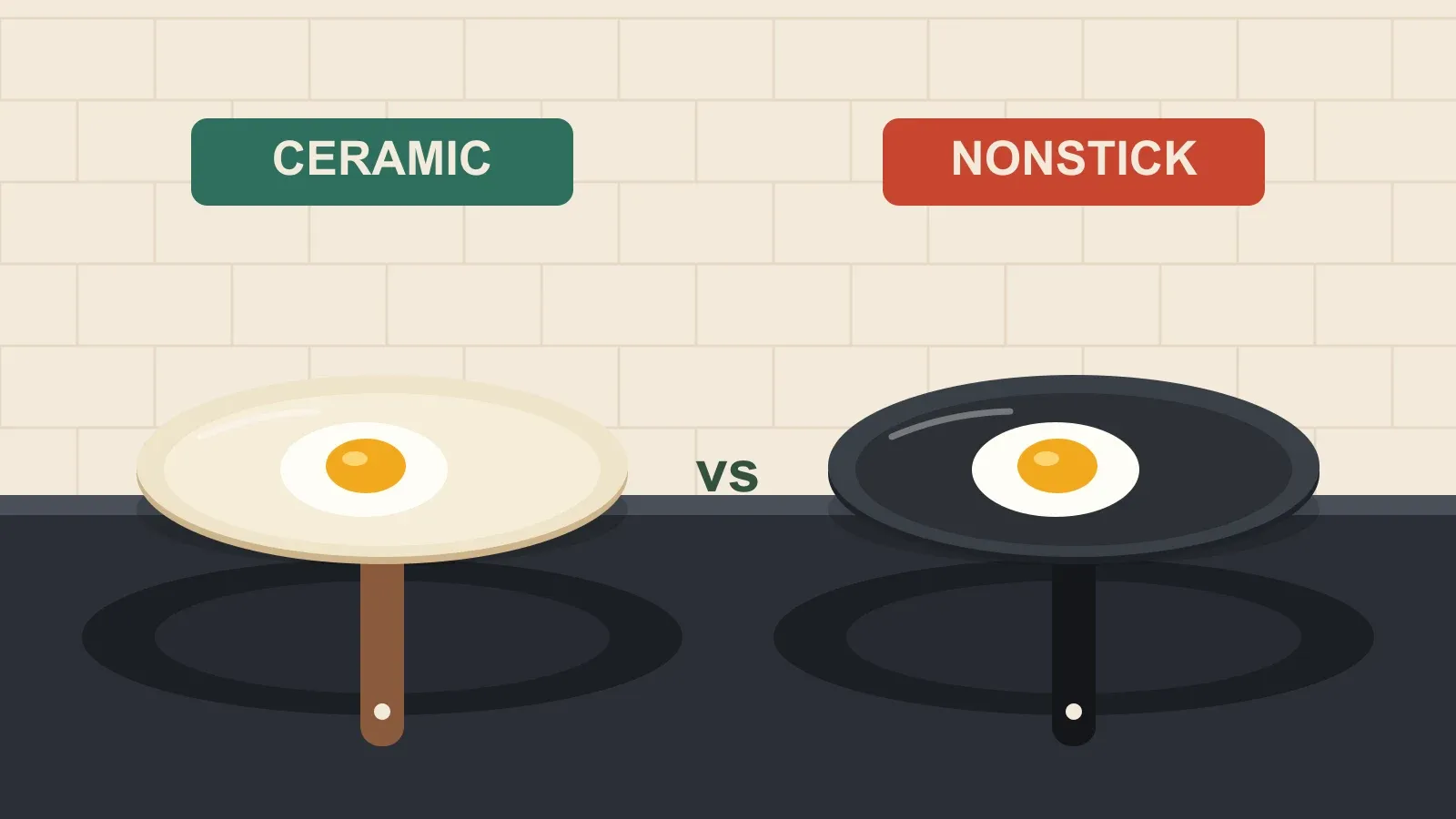
In the ceramic vs nonstick pans debate, most home cooks should buy a traditional nonstick pan (PTFE, often sold under the Teflon name) and replace it every few years. It heats a little slower, forgives mistakes and stayed slick through America’s Test Kitchen’s egg tests. Choose a ceramic pan if you want to avoid PTFE altogether and you’re willing to watch the heat closely, because ceramic cooks hotter and its coating varies a lot from brand to brand.
Neither type lasts forever. Both coatings wear out and neither can be repaired. So the ceramic vs nonstick pans question comes down to a compromise. Do you want a pan that is more forgiving, or one that is free of PTFE? Below, we compare both types, then name one pick for each.
How we put this together: we haven’t tested these pans ourselves. We compared the makers’ own specs, independent test results from America’s Test Kitchen and owner feedback for common complaints. We left out prices because they change often, so check the current price on Amazon. (More on how we choose what to recommend.) We earn a commission if you buy through these links, at no cost to you (affiliate disclosure).
Ceramic vs nonstick pans at a glance
| Traditional nonstick (PTFE) | Ceramic nonstick | |
|---|---|---|
| Coating | PTFE (a fluoropolymer, often called Teflon) | A silica-based, sol-gel coating |
| Heating | Heats more slowly; the coating insulates the pan | Heats fast and stays hot; easy to overshoot |
| Heat limits | Can break down and release fumes above about 500°F | No PTFE fumes, even at high heat |
| Oven rating | Usually 400–500°F | Usually 400–600°F |
| Weight | About 2.5–3.5 lb for a 12-inch pan | About 1.5–2.5 lb in most cases |
| Lifespan | Wears down gradually; replace when eggs stick | Often loses slickness through tiny cracks; also needs replacing |
| Quality spread | Most pans perform similarly | Wide: ATK recommended only a few |
| Best for | Eggs, pancakes, delicate fish, everyday cooks | Cooks who want PTFE-free and watch the stove |
These ranges come from America’s Test Kitchen’s guide to choosing a nonstick skillet. Your pan’s own manual has the exact numbers.
When to choose traditional nonstick
Pick PTFE if you want the pan to behave the way most recipes assume. Because it heats more slowly, the pan is more forgiving if you step away for a moment, and it makes sense for a household that cooks eggs, pancakes and fish several times a week. In America’s Test Kitchen’s test of 12-inch nonstick skillets, the best pans stayed slick through the 50-egg test, so the coating itself is not the weak point; heat and scratches are.
The trade-offs are real. PTFE can break down and release harmful fumes if the pan is heated above 500°F, so never preheat an empty pan on high or use it under a broiler. The coating also scratches and wears away over time, so plan on replacing the pan instead of keeping it for decades.
When to choose ceramic
Pick ceramic if avoiding PTFE matters to you. Ceramic coatings contain no PTFE, so there is no fume risk at high temperatures, and the pans tend to be lighter and rated for hotter ovens.
The catch is performance. America’s Test Kitchen found that most ceramic pans did poorly: only three 12-inch models passed both rounds of its 50-egg test, and several well-known brands stuck after only a handful of eggs. Ceramic also cooks hotter and faster than traditional nonstick, so you have to lower the heat or shorten cooking times, and the coating can develop microscopic cracks that make food stick. If you go ceramic, buy a pan that has passed an independent test rather than a cheap unknown set.
How long does each type last?
Honestly, nobody can promise a number. Both coatings wear down with use. Heat and abrasion shorten the life of either one. For both ceramic and nonstick pans, the habits below matter more than the brand name. Independent testing suggests ceramic’s slickness usually fades sooner, but the best ceramic pans can last about as long as an average PTFE one.
To get more years from either type:
- Cook on low to medium heat and never preheat an empty pan.
- Use wood, silicone or nylon utensils, never metal.
- Wash by hand with a soft sponge, even if the box says dishwasher safe.
- Let a hot pan cool before it meets cold water.
- Skip aerosol cooking sprays, which build up a sticky film.
- Replace the pan when eggs start to stick despite a little oil.
Our top pick for each
T-fal Experience Nonstick Frying Pan, 12-Inch
Best for: Everyday cooks who want an affordable, forgiving pan
ATK tested the 12.5-inch version of this pan and named it a Best Buy. This listing is the 12-inch Experience skillet, so check the size and the current model on Amazon. It is the pan we’d point most home cooks toward: it is easy to lift, quick to clean and cheap enough to replace when it wears out.
What we like
- America’s Test Kitchen’s Best Buy for 12-inch nonstick skillets
- Spacious, slippery and lightweight (about 2.5 lb)
- Induction compatible
Watch out for
- Oven safe only to 400°F
- A slightly domed surface pushes oil to the edges
- Too wide for a standard 12-inch lid
- PTFE coating will eventually wear out
- Coating
- PTFE nonstick
- Size
- 12 in
- Induction
- Yes
GreenPan Valencia Pro 12-Inch Ceramic Nonstick Frying Pan
Best for: Cooks who want a PTFE-free pan that passed independent testing
This is the ceramic pan to buy if you want to avoid PTFE. The coating passed America’s Test Kitchen’s egg tests, which most ceramic pans did not. Expect to turn the burner down a notch from what your old nonstick needed.
What we like
- America’s Test Kitchen’s top pick among 12-inch ceramic skillets
- One of only three 12-inch ceramic pans to pass its durability test
- Light (about 2.6 lb), induction compatible, oven safe to 600°F
Watch out for
- Runs hotter than a regular nonstick pan, so lower the heat
- Ceramic coating still wears out eventually
- Hand washing recommended
- Coating
- Ceramic nonstick, PTFE-free
- Size
- 12 in
- Induction
- Yes
- Oven
- Up to 600°F
OXO Professional 12-Inch Ceramic Nonstick Frying Pan
Best for: Cooks who want a big ceramic pan for searing and sautéing
A good second choice among ceramic pans if you want room for a full dinner. Because of the tall walls, it suits sautéing better than flipping omelets.
What we like
- Recommended by America’s Test Kitchen
- Large 10.5-inch cooking surface
- Stayed nonstick through the 50-egg tests when the surface was hot enough
Watch out for
- Heavy for a ceramic pan (about 3 lb)
- Needs a little oil or butter at low to medium heat
- High, straight walls make stirring and scooping harder
- Coating
- Ceramic nonstick, PTFE-free
- Size
- 12 in
- Induction
- Yes
Ceramic vs nonstick pans in daily cooking
Day to day, the difference shows up in three places. First, heat: a ceramic pan reaches cooking temperature quickly, so a medium burner that suits PTFE can scorch onions in ceramic. Second, oil: ceramic pans do best with a thin layer of fat, while PTFE pans can manage with very little. Third, cleanup: both rinse clean when they are fresh, but burnt-on residue is harder to remove from either without scrubbing, and scrubbing is what ruins a coating.
Induction stoves add one more check. Both types come in induction-ready versions, but not every pan is, so look for the induction symbol or the word on the listing. If you also shop for the rest of your kitchen, our guide to how to choose cookware explains when stainless steel, cast iron or carbon steel is the better tool for browning.
Which should you buy?
- You cook eggs and fish a lot and want the simple option: a traditional nonstick pan, such as the T-fal.
- You want to avoid PTFE: a tested ceramic pan, such as the GreenPan Valencia Pro.
- You need a big pan for family meals: the OXO Professional ceramic, or a 12-inch traditional pan.
- You mostly sear and brown: neither. Use a stainless steel or cast iron pan; see our guide to how to choose cookware.
Our guides in this category
Published guides in this category appear here automatically. You can also browse every guide in the Cookware category.
- Best Nonstick Pans Without Teflon: 6 PTFE-Free PicksBest picks
The best nonstick pan without Teflon is a PTFE-free ceramic pan. We rank 5 ceramic skillets and 1 carbon steel pan using America’s Test Kitchen results.
- Best Cast Iron Skillets for Glass Top Stoves: 4 Smooth PicksBest picks
The best cast iron skillet for a glass top stove is smooth and lifted, never slid. We rank 4 picks using America’s Test Kitchen results and give safe-use rules.
- Best Stainless Steel Pans for Beginners: 3 Picks and How to Use ThemBest picks
The best stainless steel pan for beginners is a 12-inch tri-ply skillet. We rank 3 picks using America’s Test Kitchen results and show how to stop sticking.
- Best Dutch Oven for Sourdough Bread: 7 Picks for a Crisp CrustBest picks
The best Dutch oven for sourdough is heavy cast iron with a tight lid. 7 picks, from the Lodge Combo Cooker to Le Creuset bread ovens, plus sizing tips.
- Ceramic vs Nonstick Pans: Which Should You Buy?Comparison
Ceramic vs nonstick pans compared on lifespan, heat, safety and care, plus the one type most home cooks should buy and our picks for each.
- Gifts for Someone Who Loves to Cook: 10 Ideas They'll UseBest picks
The best gifts for someone who loves to cook upgrade a daily tool or teach a new skill. 10 ideas, from a Le Creuset Dutch oven to Salt, Fat, Acid, Heat.
- Kitchen Gadgets Gifts: 8 Useful Picks Cooks Will Actually UseBest picks
The best kitchen gadgets gifts are tools cooks use every week, not novelties. 8 picks that pro testers favor, from OXO tongs to a Microplane zester.
- Kitchen Gift Ideas: 10 Gifts for Every Type of CookBest picks
Our kitchen gift ideas match the gift to the cook: a first apartment, a baker, a busy parent or a serious home chef. 10 picks from OXO tongs to a Le Creuset.
- Gifts for Home Cooks: 10 Ideas by How They CookBest picks
The best gifts for home cooks match how they cook: weeknight, baker, experimenter or host. 10 picks, from sharp kitchen shears to a digital thermometer.
FAQ
Is ceramic better than nonstick?
Not always. Ceramic avoids PTFE and handles higher heat, but America’s Test Kitchen found most ceramic pans did poorly in its egg tests. Traditional nonstick is the more forgiving and consistent choice.
Which lasts longer, ceramic or nonstick?
Neither lasts forever. Independent testing points to ceramic losing its slickness sooner on average, but the best ceramic pans can match an ordinary PTFE pan. How you use the pan matters as much as the coating.
Is ceramic cookware safer than Teflon?
Ceramic has no PTFE, so it can’t release PTFE fumes. PTFE is considered inert when used normally, but it can break down above about 500°F, so keep the heat at medium or lower and don’t preheat an empty pan.
Can I use metal utensils on ceramic or nonstick pans?
No. Metal scratches both coatings. Use wood, silicone or nylon.
Can ceramic and nonstick pans go in the dishwasher?
Many are labeled dishwasher safe, but America’s Test Kitchen doesn’t recommend it. Hand washing with a soft sponge protects the coating.
Do I need oil in a ceramic pan?
A little. Ceramic pans do best with a small amount of oil or butter, especially at low to medium heat.
When should I replace a nonstick or ceramic pan?
When eggs stick even with a little oil, or when the coating is scratched, flaking or visibly worn.
New to cookware? Start with our complete guide: How to Choose Cookware: Materials, Sizes and the Pieces You Need